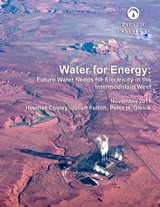
Water for Energy: Future Water Needs for Electricity in the Intermountain West

The production of electricity, from fuel extraction to generation, has growing impacts on both water availability and quality. The new analysis from the Pacific Institute evaluates future water needs for different energy futures and identifies a growing risk of conflicts between electricity production and water availability in the U.S. Intermountain West. The new report also identifies strategies to ensure the long-term sustainable use of both resources.

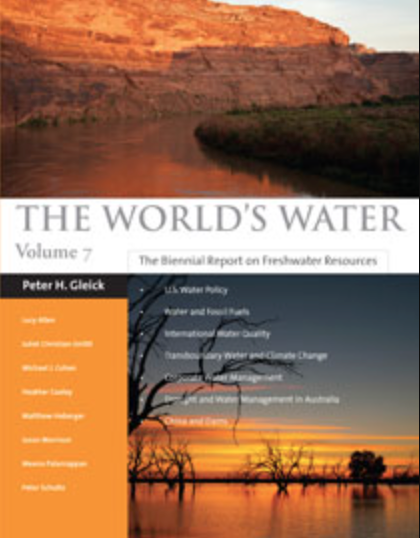
The World’s Water, Volume 7

The World’s Water, Vol. 7 was released as the Pacific Institute headed into its 25th Anniversary year. Institute President and series editor Peter Gleick, with coauthors Lucy Allen, Juliet Christian-Smith, Michael Cohen, Heather Cooley, Matthew Heberger, Jason Morrison, Meena Palaniappan, and Peter Schulte of the Pacific Institute, address the timely and pressing issues in the management of our most precious resource. Topics range from water and fossil fuels, China and dams, and U.S. water policy to international water quality, transboundary water and climate change, corporate water management, and drought and water management in Australia. Nineteen data tables provide an invaluable resource for analyzing the state of the world’s water, accessibility, sustainability, attitudes, and more including top environmental concerns and bottled water consumption stats. There is also a fun Water Brief on “Water in the Movies.”

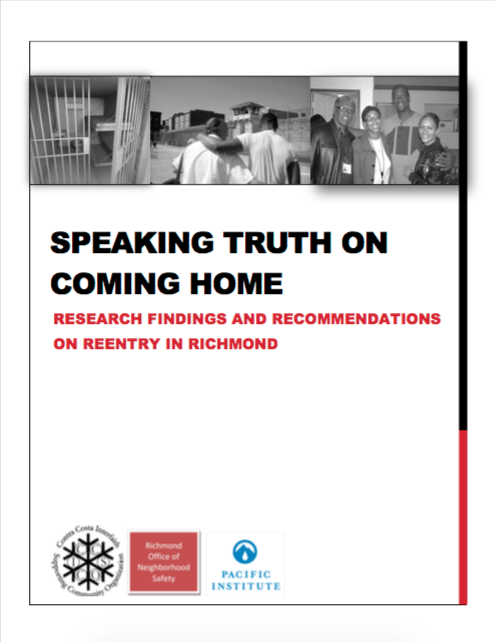
Speaking Truth on Coming Home: Research Findings and Recommendations on Re-entry in Richmond

The Safe Return Project is a participatory research and action initiative led by a group of formerly incarcerated Richmond residents carrying out research, community organizing, and policy advocacy to improve community reintegration after incarceration. In this partnership with Contra Costa Interfaith Supporting Community Organization (CCISCO) and Richmond Office of Neighborhood Safety, the Pacific Institute provides capacity building, coordination, and research support.

Potential Water Savings Associated with Agricultural Water Efficiency Improvements: A Case Study of California

The Pacific Institute analyzes the potential for water savings from irrigation efficiency improvements in California, USA in a newly published peer-reviewed article in the journal Water Policy. The new article, Potential water savings associated with agricultural water efficiency improvements: a case study of California, USA models water savings associated with three efficiency scenarios in wet, average and dry water years.

Policy Options for Water Management in the Verde Valley, Arizona

The water of the Verde Valley in central Arizona, both in the ground and flowing at the surface, is a natural resource that is critical to the regional economy, environmental sustainability, and quality of life—but the Verde River faces unprecedented threats from over-allocation, development, and lack of cohesive water management. The report Policy Options for Water Management in the Verde Valley, Arizona, coauthored by Matthew Heberger and Michael Cohen of the Pacific Institute; James Limbrunner and Daniel Sheer of HydroLogics, Inc.; and Jim Henderson and Bob Raucher of Stratus Consulting, examines possible futures for the Verde River within the Verde Valley. The researchers provide information for stakeholders and decision-makers on the river’s resources, economic value, and tools for promoting sustainable water management.

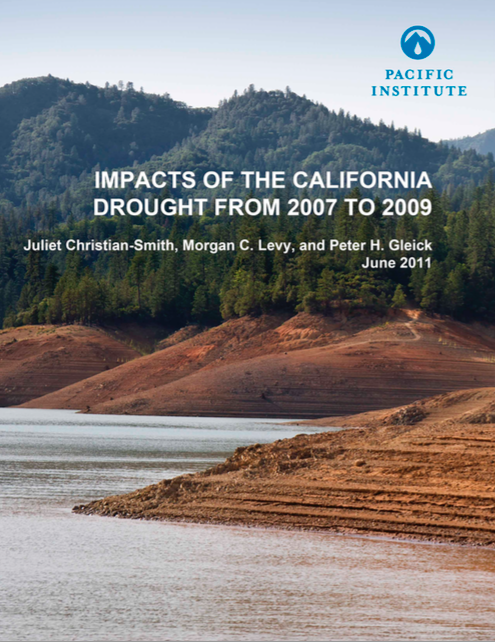
Impacts of the California Drought from 2007 to 2009: Surprising Outcomes for California’s Agriculture, Energy, and Environment

California’s three-year drought, which ended with this season’s cool and wet weather, had complicated and serious impacts that have been poorly understood and reported. Some of the impacts were expected; others were surprising. The Pacific Institute has just completed a nine-month assessment of new data from California’s agricultural, energy, and environmental sectors to evaluate actual consequences of the drought for the state.

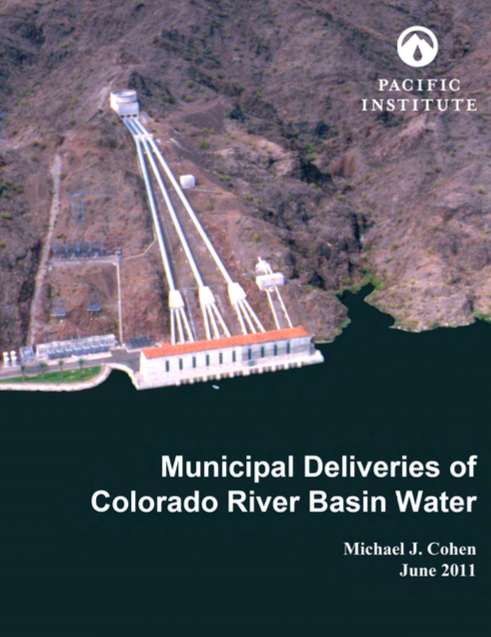
Municipal Deliveries of Colorado River Basin Water: New Report Examines 100 Cities and Agencies

The Pacific Institute’s Municipal Deliveries of Colorado River Basin Water documents population and water delivery information and trends for 100 cities and agencies that deliver water from the Colorado River basin. Since 1990, the number of people in the United States and Mexico who use Colorado River basin water has increased by more than 10 million -– but their overall per capita water use declined by an average of at least one percent per year from 1990 to 2008.

Testimony: The Vulnerability of U.S. Water Resources to Climate Change

What Can We Expect for Water from Climate Change?
• A hotter world.
• Mixed changes in precipitation (both by region and time period).
• Dramatic reductions in snowfall and accelerating snowmelt; related changes in runoff timing.
• Rising sea-level with impacts on groundwater quality and coastal/delta ecosystems.
• Accelerating influence on extreme events: including floods and droughts.

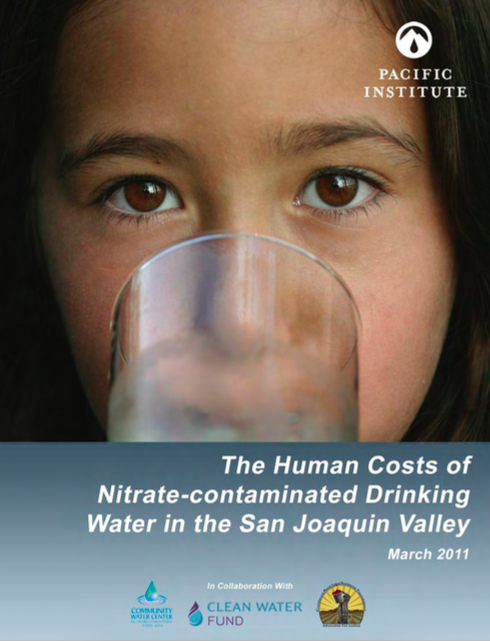
The Human Costs of Nitrate-Contaminated Drinking Water in the San Joaquin Valley

While most Californians take for granted that safe water is readily available at the turn of a tap, a growing number of communities, primarily in the San Joaquin Valley and other agricultural areas of the state, face very real impacts from nitrate contamination of the drinking water sources serving their homes and schools. New research led by the Pacific Institute, The Human Costs of Nitrate-Contaminated Drinking Water in the San Joaquin Valley, finds that nitrate contamination of groundwater has wide-reaching effects on California’s health, economic vitality, and environmental well being, disproportionately affecting low-income households and Spanish-speaking residents.

Op-Ed: Report Wrongly Excuses Farms From Helping Solve Water Woes

The latest report on California’s water crisis has recently been released by the Public Policy Institute of California, and while there are good things in this work, it has two fundamental flaws that cannot be ignored: It completely lets the agricultural sector off the hook for its part in causing – and ultimately helping to solve – our water problems, and it lays all the pressure and responsibility on urban water users and the environment.

Op-Ed: Another View: Busting Water Conservation Myths

As a solution for California’s complex water challenges, conserving water to get more from every drop stands out for its great potential and the misconceptions around it.

A recent op-ed column, “Putting two myths about the state’s drought to rest” (Viewpoints, July 6), repeated three misstatements about conservation that are often used to delay implementing strategies for more efficient water use. Until these misunderstandings are corrected, common-sense improvements will continue to be underfunded and inadequately pursued. The failure to use proven and cost-effective efficiency programs can be seen in the limited attention to conservation in the state water bond proposals and only modest efforts of some water agencies.

Op-Ed: State Needs More Water Storage – Underfoot

The massive rains over the past month are both a blessing and a curse for California. A blessing because we desperately need the water, having just weathered a serious multi-year drought. A curse because the intensity of rain causes serious problems with flooding, erosion, landslides and contamination with pollutants from the land. And the intensity of the rainfall causes another problem: Much of the excess water runs off in ways that do not help natural ecosystems or provide long-term benefits to our cities and farms.

The CEO Water Mandate: Guide to Responsible Business Engagement with Water Policy

With water issues among the world’s most critical sustainability challenges, businesses are facing increasing water-related risk to their operations. The just-released Guide to Responsible Business Engagement with Water Policy from the UN Global Compact CEO Water Mandate provides strategies for companies to turn risk into opportunity by advocating for water management approaches that meet the needs of business, communities, and nature.

The Human Right to Water: Emerging Corporate Practice and Stakeholder Expectations

In July 2010, the UN General Assembly (UNGA) recognized access to safe drinking water and sanitation as a human right. Two months later, the UN Human Rights Council (UNHRC) affirmed this right by a consensus resolution. Even before these UN actions, many governments, NGOs, academics, and companies alike have acknowledged this human right to water and sanitation and sought to find solutions to help realize it on the ground. Further, a number of initiatives have emerged that have attempted to elucidate what this right means for a number of different actors, including companies.

Advancing Community Health through Community Benefits Agreements

The redevelopment of the former Oakland Army Base presents an enormous opportunity for investment in strategies to improve community health. A Community Benefits Agreement (CBA) with the developer of the former Base is one strategy for the community to directly negotiate the benefits that will meet their priorities, monitor the project’s impact as it moves forward, and hold the developer accountable for the agreement. A CBA is a legally binding contract between a developer and community groups, and sometimes local government, that specifies benefits that a development project will result in for the local community.

California’s Next Million Acre-Feet: Saving Water, Energy, and Money

A new analysis from the Pacific Institute recommends specific actions that can annually save a million acre-feet of water quickly and at a lower economic and ecological cost than developing new supplies. The assessment notes that new actions are immediately needed to reduce the growing tensions over the state’s water resources and to address California’s persistent water supply challenges.

Op-Ed: Moving Forward on Water

Now that California lawmakers have pulled an $11 billion water bond measure off the November ballot, California is facing new questions about how to fix our longstanding water problems, including the long-term health of the Sacramento-San Joaquin Delta and the future reliability of our water supply. A number of commentators have praised or pilloried the delay of the bond, but one thing we can all agree on is that California’s water challenges have not gone away. The recent State Water Resources Control Board report that finds we must halve our water withdrawals from the rivers and streams that sustain the Delta is simply one more indication that we have over-tapped California’s precious water resources and that we must find innovative ways to do more with less.

Support for SB 51

Dear Governor Schwarzenegger:

On behalf of the following undersigned organizations representing environmental, hunting and fishing interests, we write to respectfully urge you to sign SB 51 (Ducheny). This important legislation sets forth the implementing structure for the Salton Sea restoration effort. SB 51 is the product of nearly three years of work and discussion between all of the various interests involved in Salton Sea restoration and reflects a balanced approach for integrating local and statewide interests into the implementation of the Salton Sea Restoration plan.

Scroll to Top