

440 Resources

Community Resilience Fact Sheets Help Communities Prepare for Climate Change Impacts
April 24, 2013
As Hurricanes Sandy and Katrina have taught us, climate change is a global process with very localized impacts that can profoundly affect community health and quality of life. These localized impacts, ranging from extreme temperatures to rising sea levels, will disproportionately affect vulnerable populations such as the elderly, renters, low-income residents, limited English speakers, those with pre-existing medical conditions, and those without health or home insurance.
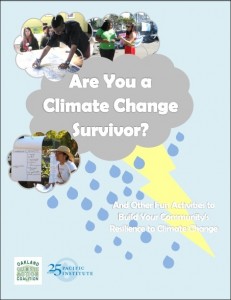
Climate Change Survivor Workbook with Games
April 24, 2013
Oakland residents can take steps to protect their communities in the face of climate change impacts.
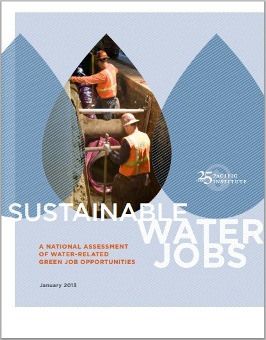
Sustainable Water Jobs: A National Assessment of Water-Related Green Job Opportunities
February 14, 2013
This comprehensive study finds that investments to increase efficient water use and reuse will both address growing problems associated with drought, flooding, and contamination, and simultaneously create jobs in a wide range of professions.
Sustainable Water Management for Urban Agriculture: Planting Justice, Oakland
January 30, 2013
The food justice movement has deep roots in the San Francisco Bay Area, where the organization Planting Justice is utilizing urban agriculture to address economic and social justice issues.
California’s Water Footprint
December 11, 2012
This report offers the first comprehensive assessment of California’s water footprint.
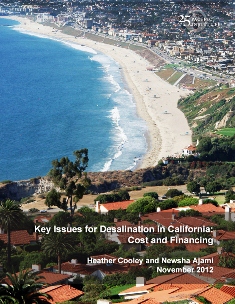
Key Issues in Seawater Desalination in California: Costs and Financing
November 27, 2012
Seawater desalination is gaining traction as a potential solution to water supply challenges in California, but economics – specifically, the cost of the water produced and the complex financial arrangements needed to develop a project – will ultimately determine the success and extent of this technology.
Sustainability Standards and Public Governance
November 26, 2012
An emerging theme of the framing project from its inception in 2009 was the growing awareness of the significance and complexity of the interactions between voluntary, non-governmental sustainability standards and national and international governance, raising fundamental questions about standards development, use, legitimacy and sustainability.
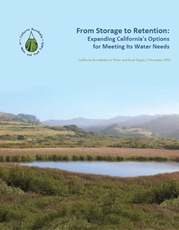
From Storage to Retention: Expanding California’s Options for Meeting its Water Needs
November 11, 2012
California’s ability to grow its wealth of specialty crops depends on retaining and storing water from the state's wet season for use during the long, dry summer season.
Guide to Water-Related Collective Action and Water Action Hub
August 29, 2012
Global water challenges must be addressed through collective action, where multiple stakeholders collaborate on shared water stewardship goals.
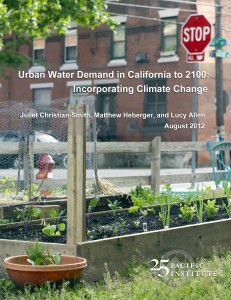
Urban Water Demand in California to 2100: Incorporating Climate Change
August 28, 2012
Climate change will have significant impacts on California water supply and demand. Research shows that the state’s changing climate will lead to increased water use in cities and suburbs, while water supply is expected to diminish.
Bringing a Human Rights Lens to Corporate Water Stewardship
August 26, 2012
Expectations that business will respect, and in some cases support or help fulfill, internationally recognized human rights have increased over the past decade.
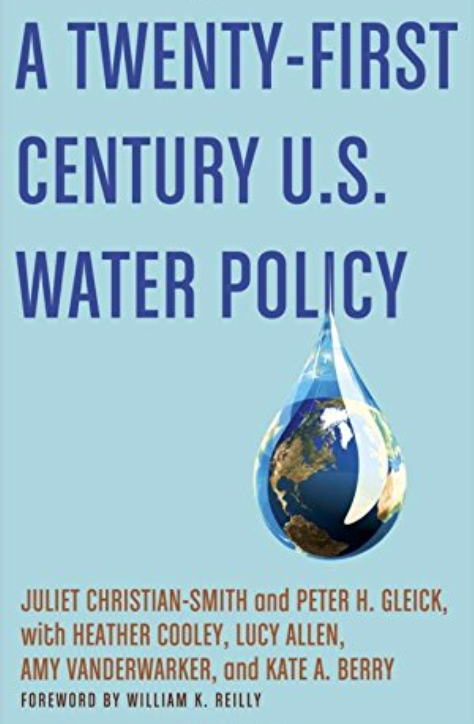
A Twenty-First Century U.S. Water Policy
July 31, 2012
This book provides the first independent assessment of water issues and water management in the United States in many decades, addressing emerging and persistent challenges from the perspectives of science, public policy, environmental justice, economics, and law.
Cadiz Public Comments
July 24, 2012
This letter contains a summary of comments submitted by the Pacific Institute on the Draft Environmental Impact Report (DEIR) of the Cadiz Valley Water Conservation, Recovery, and Storage Project on March 13th, 2012.
Social Vulnerability to Climate Change in California
July 21, 2012
California faces a range of impacts from global climate change, including increased incidences of extreme heat, wildfires, coastal flooding, and erosion.
Implications of Future Water Supply Sources for Energy Demands
July 15, 2012
The Water–Energy Simulator (WESim) is an easy-to-use analytical tool that can be used to evaluate the energy and greenhouse gas implications of water management decisions.
Page 15 of 30
From the Blog
- Oct 07, 2026
- Overcoming Funding Barriers for Water Efficiency with Dr. Emilio Mateo
- Sep 01, 2026
- The Colorado River Basin at Night
- Aug 19, 2026
- More Than a Playground with Dr. Sonali Abraham
- Aug 06, 2026
- 5 Trends Shaping Agricultural Water Use in California
- Jul 23, 2026
- Behind the Data on Water Conflict with Morgan Shimabuku