


439 Resources
The Impacts of Sea Level Rise on the San Francisco Bay
July 2, 2012 | publication
Rising sea levels from global climate change pose a serious threat to the highly developed coastal communities of the San Francisco Bay. This report assesses the populations, critical infrastructure, and property at risk from projected sea-level rise, if no action is taken to protect the coast.
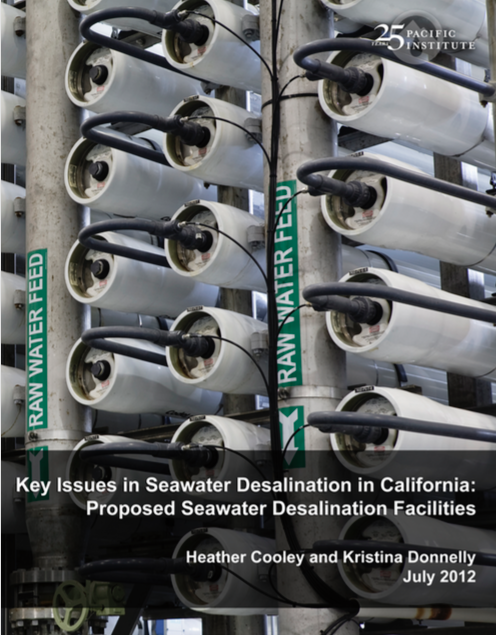
Key Issues in Seawater Desalination in California: Proposed Seawater Desalination Facilities
July 1, 2012 | publication
In 2006, the Pacific Institute published “Desalination, With a Grain of Salt,” a comprehensive overview of the advantages and disadvantages of seawater desalination to help meet California’s water needs. In 2012, the Institute launched a series of research reports identifying the key outstanding issues for desalination in California: cost and financing; energy use and associated greenhouse gas emissions; and marine impacts.
Opinion Editorial: Separating Frack From Fiction
June 22, 2012 | publication
Fracking – a process to improve the production of oil and gas wells – has generated tremendous controversy in recent years. There are daily and confusing media reports from outlets across the United States and other countries, including Canada, South Africa, Australia, France and England.
Hydraulic Fracturing and Water Resources: Separating the Frack from the Fiction
June 21, 2012 | publication
Hydraulic fracturing, or “fracking,” has generated growing controversy. The lack of credible and comprehensive data around the possible risks of fracking is a major impediment to a clear assessment of its impacts.
Water as a Casualty of Conflict: Threats to Business and Society in High-Risk Areas
June 13, 2012 | publication
While much research has been produced on how water use and pollution can exacerbate conflict, this report focuses more broadly on the ways conflict and high-risk situations can affect water systems and resources directly, as well as the planning, construction, operation, and management of water systems.
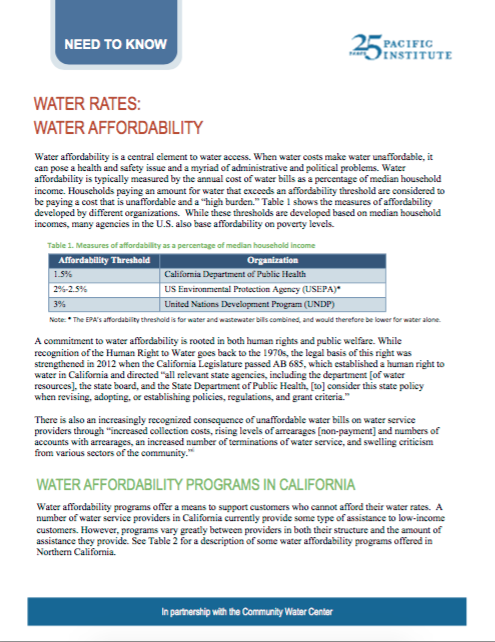
Water Rates: Water Affordability – Issue Brief
June 2, 2012 | publication
Water rates in the United States are not typically understood as a human rights issue, but utility bills can be an exceptional burden for low income households.
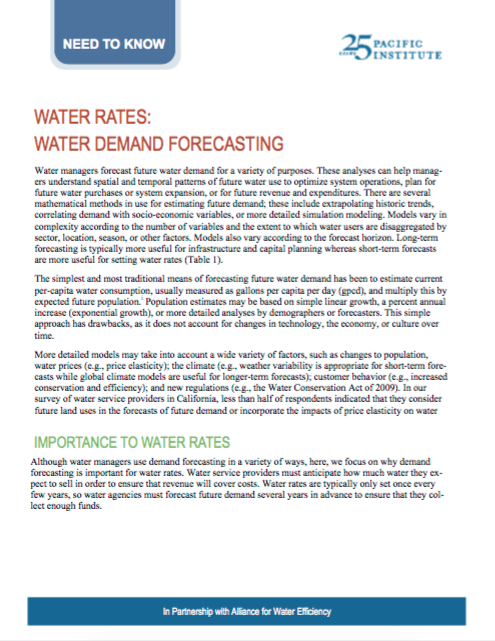
Water Rates: Water Demand Forecasting – Issue Brief
June 2, 2012 | publication
Historically, water demand forecasts have been determined by estimating current per-capita water consumption multiplied by expected future population.
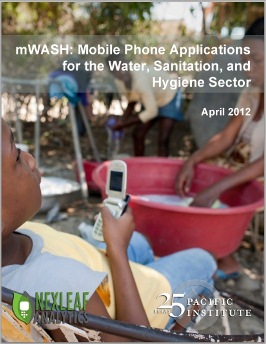
mWASH: Mobile Phone Applications for the Water, Sanitation, and Hygiene Sector
April 26, 2012 | publication
Billions of the world’s poor still lack access to basic water and sanitation services, but mobile devices are common even in areas without these services.
CE2 Model: Evaluating the Costs and Benefits of Urban Water Conservation and Efficiency Measures
April 26, 2012 | publication
The Pacific Institute has developed the Cost Effectiveness of Water Conservation and Efficiency (CE2) Model to help evaluate the economic desirability of water conservation and efficiency measures and explore how costs and benefits can be shared among customers, water utilities, and other entities. Designed primarily for water utility staff, the model quickly and easily calculates financial metrics that are meaningful and readily understood by planners and managers and provides a common platform through which to discuss the costs and benefits of water conservation and efficiency.
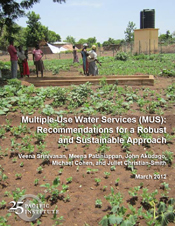
Multiple-Use Water Services (MUS): Recommendations for a Robust and Sustainable Approach
March 13, 2012 | publication
Creating sustainable water systems will continue to be one of the biggest challenges of the 21st century. Multiple-Use Water Services (MUS) has emerged as a water-provision and management approach that addresses the poverty alleviation potential of water projects. MUS is rooted in the multiple ways in which people have interacted with their local water sources over time, and seeks to overcome the fragmented way in which water is currently managed. This report analyzes the gaps in the MUS approach and evaluates previous efforts at integration in the water sector to identify lessons learned and recommendations for making MUS implementation more robust and sustainable.
The Water – Energy Nexus in the American West: The Energy Implications of Desalination
January 30, 2012 | publication
Despite some major barriers to desalination, interest has recently mushroomed as technology has improved, demands for water have grown, and prices have declined.
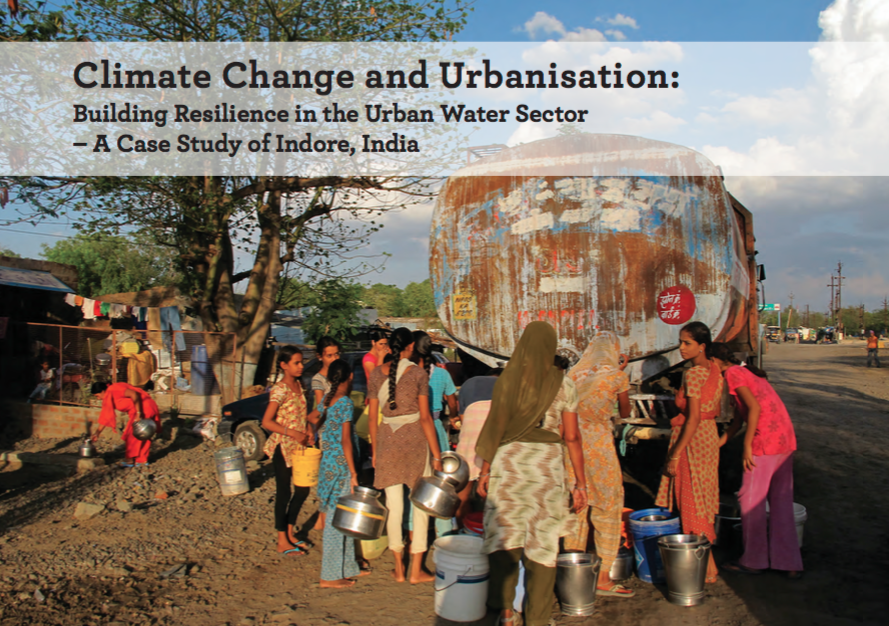
Climate Change and Urbanisation: Building Resilience in the Urban Water Sector– A Case Study of Indore, India
December 26, 2011 | publication
Thousands of cities in the developing world face rising pressures on water resources due to population growth and urbanization, which are intensified by the effects of climate change. In developed countries cities, the government or formal sector often exclusively manage water supply services, while in developing countries informal water managers may predominate.
California Farm Water Success Stories: Vegetated Waterways and Riparian Restoration
December 8, 2011 | publication
California Farm Water Success Stories: Volumetric Pricing and Conjunctive Use
December 8, 2011 | publication
California Farm Water Success Stories: State and Federal Funding Accelerates Efficiency
December 8, 2011 | publication
Page 16 of 30
From the Blog
- Sep 01, 2026
- The Colorado River Basin at Night
- Aug 19, 2026
- More Than a Playground with Dr. Sonali Abraham
- Aug 06, 2026
- 5 Trends Shaping Agricultural Water Use in California
- Jul 23, 2026
- Behind the Data on Water Conflict with Morgan Shimabuku
- Jul 13, 2026
- Why the Most Important Water Work is the Hardest to Fund