Energy Implications of Bottled Water

In an article published in the February 2009 edition of the peer-reviewed journal Environmental Research Letters, the Pacific Institute analyses the energy requirements for various stages in bottled water production, including the energy to manufacture the plastic bottles, process the water and the bottles, and transport and cool the final product.

Op-Ed: Peripheral Canal Idea Still Thin on Details

The governor’s Delta Vision Committee recently announced its recommendations for addressing the decades-old challenges facing California’s water system. Taken all together, the recommendations are comprehensive and thoughtful. The media and public, however, have focused on only one –- the proposal to build a peripheral canal.

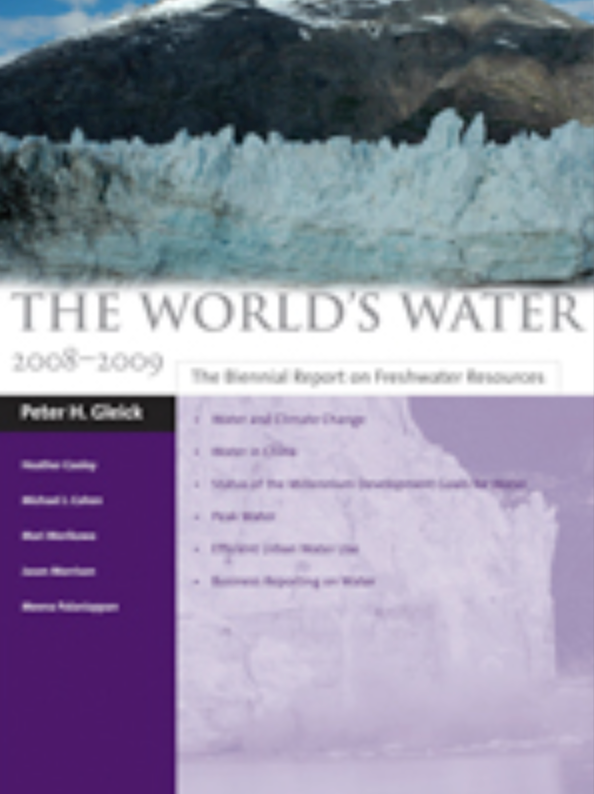
The World’s Water, Volume 6

The much anticipated sixth volume in this highly regarded series, The World’s Water 2008-2009, is now available. Pacific Institute President and series editor Peter Gleick, with Institute coauthors Heather Cooley, Michael Cohen, Mari Morikawa, Jason Morrison, and Meena Palaniappan addresses the ever-more-pressing issues of our use and misuse of the world’s freshwater resources. Topics range from peak water, China’s water crisis, and climate change impacts and adaptations, to updates on the Millennium Development Goals, business reporting on water, and urban water use efficiency. Twenty new data tables provide a definitive resource for everyone concerned with sustainable water use, including the eye-opening chart of “The Water Content of Things.”

National Water Priorities Budget

Following up on the “Water: Threats and Opportunities – Recommendations to the Next President” released in October 2008, the Pacific Institute offers a set of priority budget suggestions for addressing water-related challenges facing the United States. The budget amounts below are suggested first-year additions to base year funding, with additional recommendations for modest ramp-ups.

Peak Water

To judge from recent media attention, the finite supply of freshwater on Earth has been nearly tapped dry, leading to a natural resource calamity on par with, or even worse than, running out of accessible, affordable oil. The Christian Science Monitor asks, “Is Water Becoming the New Oil,” and the Washington Post tells us to “Get ready for peak water, and even peak food.” Wired Magazine reminds us that aquifers and rivers are running dry, and others talk about how Peak Water is going to reshape civilization.

EPA Drinking Water Preliminary Regulatory Determination on Perchlorate

The Pacific Institute would like to formally submit the following comments on the Environmental Protection Agency’s (EPA) Drinking Water Preliminary Regulatory Determination on Perchlorate. After reviewing the Preliminary Determination and relevant literature, we do not agree with the EPA’s determination that regulating perchlorate presents no “meaningful opportunity for health risk reduction for persons served by public water systems.” While we recognize that the science upon which the determination is based has been contested, our comments address a number of further concerns, including the protection of vulnerable populations; the impacts that the determination will have on remediation efforts and future monitoring; and the criteria for what is considered to be a “meaningful opportunity” for protection of public health.

Water: Threats and Opportunities: Recommendations for the Next President

Ongoing severe drought afflicts farmers and communities in California, the southeastern states, Texas, and elsewhere. Water restrictions are being imposed to try to save water. Climate changes are altering water availability and quality. The nation’s water systems are vulnerable to terrorism. And international politics around water are increasingly affecting U.S. interests. Why don’t we hear more about water?

CEO Water Mandate: Transparency Framework Phase One

Transparency has been identified by endorsing companies and external stakeholders alike as a key issue in making the CEO Water Mandate a legitimate, meaningful initiative that advances best practice in sustainable water management in the private sector. As a result, the Mandate’s 2008-2009 work plan calls for the development of a Transparency Framework describing general expectations for transparency as it relates to both individual Mandate endorsers and the initiative as a whole. The ultimate goal of the CEO Water Mandate Transparency Framework is to establish transparency policies, objectives, and activities that are deemed valuable and credible by endorsers and key interests.

Op-Ed: Water for Food

As California politicians continue to argue over developing comprehensive solutions to the state’s water problems, eyes are inevitably turning to the agricultural sector, which uses 80 percent of the water consumed by Californians.

More with Less: Agricultural Water Conservation and Efficiency in California – A Special Focus on the Delta

California farmers can grow more food and fiber with less water, according to the Pacific Institute report, More with Less: Agricultural Water Conservation and Efficiency in California – A Special Focus on the Delta. The report offers a comprehensive analysis of how to maintain a strong agricultural economy while improving the efficiency of water use and reducing groundwater overdraft and water withdrawals from the critically threatened Sacramento-San Joaquin Delta.

Op-Ed: California Can Grow More Food AND Take Less Water from the Delta

We can do more with less. Nations in drier climates around the world and forward-thinking farmers in California already are using less water to grow more crops – with greater profits. It is time for California to implement economic and environmental policies that encourage farmers to use water more efficiently, both for the good of the environment and to sustain a robust agricultural sector.

CEO Water Mandate 2nd Working Conference

Recognizing the urgency with respect to addressing the emerging global water crisis, the UN Secretary-General, in partnership with a number of international business leaders, launched in July 2007 a new initiative – The CEO Water Mandate – under the auspices of the UN Global Compact. The initiative was developed with the understanding that the private sector, through the production of goods and services, impacts water resources – both directly and through supply chains. Endorsing CEOs acknowledge that in order to operate in a more sustainable manner, and contribute to the vision of the UN Global Compact and the realization of the Millennium Development Goals, they have a responsibility to make water-resources management a priority, and to work with governments, UN agencies, non-governmental organizations, and other stakeholders to address this global water challenge.

Op-Ed: Save the Salton Sea

The public health and ecological crises developing around southeastern California’s long-neglected Salton Sea are finally getting legislative attention.

Extreme Weather Events as a Result of Climatic Change

My testimony today addresses the rising risk of extreme weather-related events as a result of climatic changes and their impact on water resources, with a focus on the western United States. In the short time available, let me provide a summary overview. I have submitted more detailed supplementary materials for your review.

Op-Ed: State Needs Innovative, Aggressive Water Solutions

For more than a decade, California has had relatively adequate winter rains and mostly full reservoirs. No longer. We had the opportunity to fix many of our water problems while the state had more abundant water, but that chance has been squandered. And though we’ve never been very good at making rational water decisions in a crisis, the time to change that is clearly and urgently here.

Bioenergy and Greenhouse Gases

Branches, stalks, and manure are waste no longer; bioenergy is part of the solution to reducing greenhouse-gas emissions. A study released by the Green Power Institute, the Renewable Energy Program of the Pacific Institute, reports that converting forest residues, agricultural and urban biomass waste, and gases from manure and landfills into energy helps reduce our greenhouse-gas emissions and replace a portion of fossil-fuel use.

A Review of Decision-Making Support Tools in the Water, Sanitation, and Hygiene Sector

While more than a billion people lack safe water and 2.6 billion lack access to sanitation worldwide, numerous technologies and approaches already exist to provide access to clean water, safe sanitation, and hygiene education. In a report from the Pacific Institute and the Woodrow Wilscon Center’s Environmental Change and Security Program (ECSP), scientists and development experts evaluate existing resources and identify a pressing need still remains for a comprehensive decision-making tool that can assist practitioners in evaluating and identifying the best technology or approach to meet their water, sanitation, and hygiene (WASH) needs.

CEO Water Mandate Inaugural Working Conference

Recognizing the urgency with respect to addressing the emerging global water crisis, the UN Secretary-General, in partnership with a number of international business leaders, launched in July 2007 a new initiative – The CEO Water Mandate – under the auspices of the UN Global Compact. The initiative was developed with the understanding that the private sector, through the production of goods and services, impacts water resources – both directly and through supply chains. Endorsing CEOs acknowledge that in order to operate in a sustainable manner, and contribute to the vision of the UN Global Compact and the realization of the Millennium Development Goals, they have a responsibility to make water-resources management a priority, and to work with governments, UN agencies, non-governmental organizations, and other stakeholders to address this challenge.

Op-Ed: Billions of Drops in the Bucket: Just Rethinking How We Use Water Can be as Effective as Huge Infrastructure Projects

After more than a decade of generous rainfall and healthy river flows, the dry years are back. Much of the state, notably Southern California, has been experiencing sever drought. The major reservoirs along the Colorado River are less than half full. Snowpack in the Sierra Nevada last winter was half of normal, and meteorologists say we may be headed into another dry winter despite this weekend’s rain.

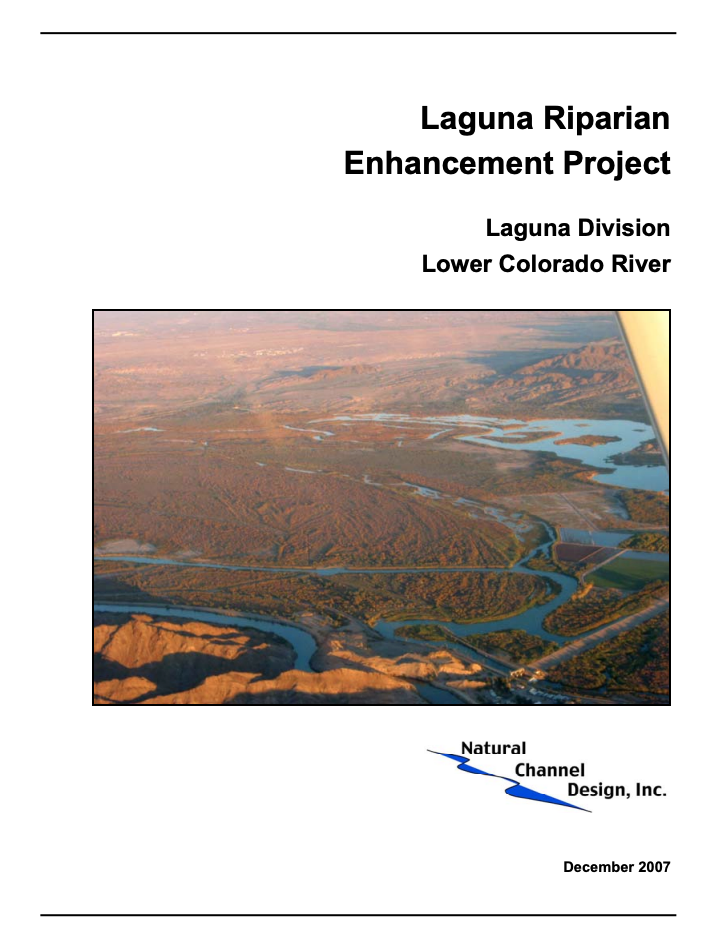
Laguna Riparian Enhancement Project

The Laguna Riparian Habitat Enhancement Concept presents a conceptual plan for improving native riparian vegetation and associated habitats within the Laguna Reach along the lower Colorado River (LCR). Various entities including the Bureau of Reclamation (Reclamation) are actively involved in protecting and restoring habitats along the lower Colorado River. This concept is intended to provide a basis for efforts to enhance or restore habitats within the Laguna Division for a variety of valuable fish and bird species and to stimulate discussion on ways to meet these goals.

Integrity of Science: Bottled Water and Energy Factsheet: Getting to 17 Million Barrels

The Pacific Institute finds that it took approximately 17 million barrels of oil equivalent to produce plastic for bottled water consumed by Americans in 2006—enough energy to fuel more than 1 million American cars and light trucks for a year. The widely cited 1.5 million barrel statistic is an error, the result of a miscommunication between a journalist and a researcher in 2003. That researcher and others now stand by this updated assessment.

Hidden Oasis: Water Conservation and Efficiency in Las Vegas

Two of the West’s preeminent water organizations report Las Vegas Valley is sitting on an oasis of water and money savings. In their new report, the Pacific Institute and Western Resource Advocates find up to 40% of water could be saved in some sectors through improvements to indoor and outdoor water efficiency. They also found that through improving indoor water efficiency in particular, Las Vegas residents and businesses can cut water-related energy use and greenhouse gases. These findings are contained in Hidden Oasis: Water Conservation and Efficiency in Las Vegas available for download below.

Bottled Vs. Tap Water: Video

For the Santa Clara Water District, the recent resolution promoting tap water over bottled water was a clear choice–a choice largely bolstered by Pacific Institute research. The District’s recognition of the economic and environmental impacts of bottled water led them to ban the sale of bottled water in district facilities.

Op-Ed: The Best Plan for the Salton Sea is Yet to Come

Right in the middle of one of the driest deserts in North America lies California’s largest lake, the little-known and oft-maligned Salton Sea. The Sea and its environs are one of the most important spots on the map for birds, with more than 400 species of birds – often numbering in the millions of individual birds – visiting the Sea every year. Despite its importance, the Salton Sea is the Rodney Dangerfield of California’s lakes, enduring insult after insult. Within the next 20-30 years, the Sea will be dealt the greatest insult, as the volume of water that sustains this 360-square mile lake will decrease by more than 40 percent, rapidly shrinking the lake and increasing the amount of dust and salt that blows through the Imperial and Coachella valleys.

Scroll to Top