


By Jason Morrison, President, Pacific Institute and Head of the CEO Water Mandate
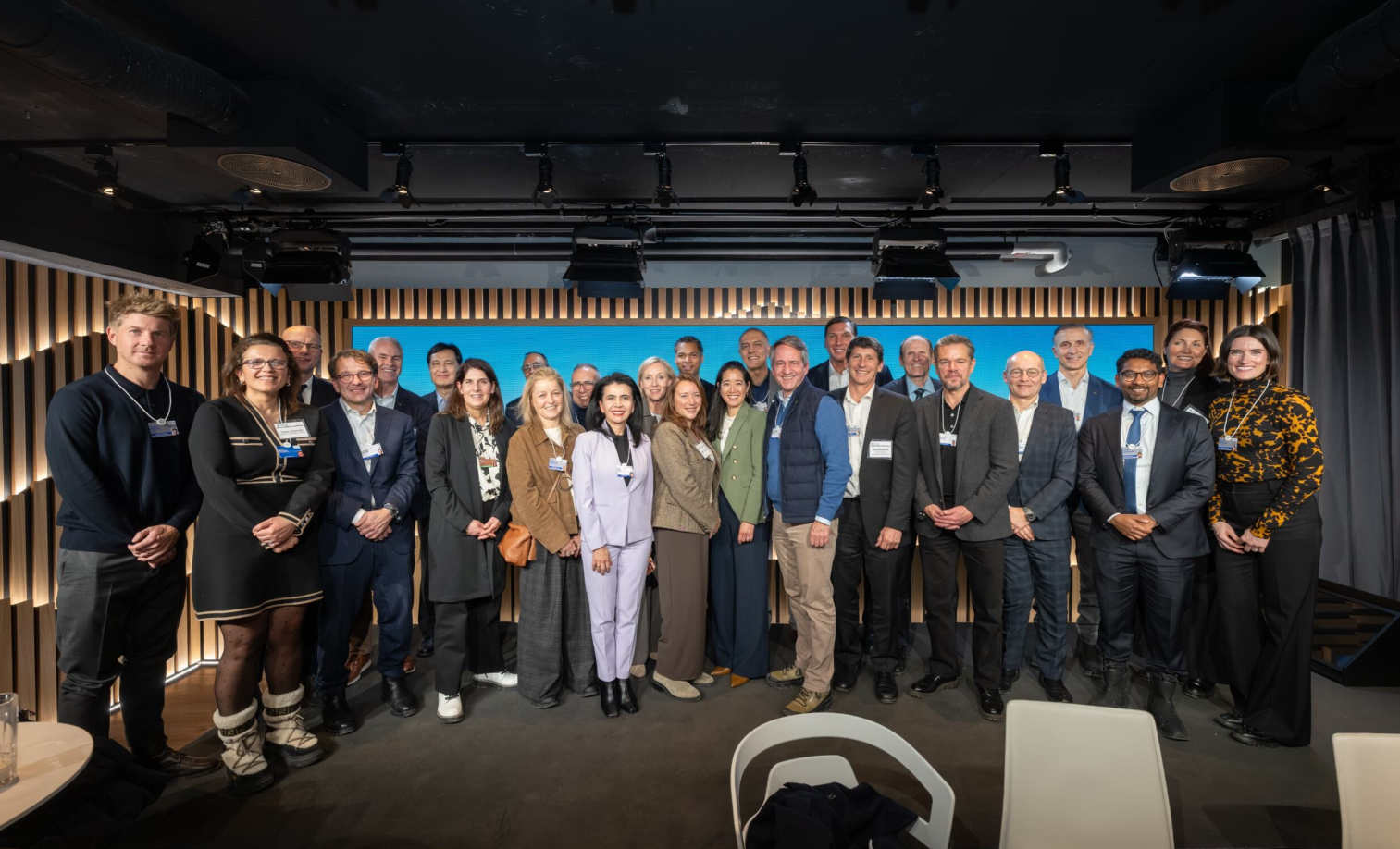
At the World Economic Forum Annual Meeting in Davos, I had the opportunity to engage with business, NGO, and government leaders through the Water Resilience Coalition (WRC) Executive Roundtable at a pivotal moment for global water resilience. The conversations reinforced a reality: water risk is business risk, and addressing it requires coordinated, strategic action at scale.
As the organization that has managed and led the Water Resilience Coalition since its founding, the Pacific Institute has seen firsthand how corporate water stewardship has evolved; from fragmented efforts to a more mature, collective, and results-oriented approach. Davos offered an important moment to reflect on progress made, lessons learned, and what it will take to scale impact in the years ahead.
This blog highlights key takeaways from Davos—capturing the progress shared, partnerships announced, and priorities shaping the next phase of collective business action on water resilience.
Collective Action, Real Results
Since its launch in 2020, the Water Resilience Coalition—an initiative of the CEO Water Mandate, itself a partnership between the Pacific Institute and the UN Global Compact—has demonstrated what is possible when companies align around shared goals:
- 42 member companies now actively engaged
- Collective action underway in 24 critical river basins
- 63 million people enabled with improved access to water and sanitation
- AI- and space-enabled basin monitoring platforms deployed in 10 basins
- More than USD $500 million mobilized for water stewardship projects
These outcomes matter not just from an environmental or social perspective, but from a business value standpoint. They reflect disciplined collaboration, capital alignment, and a growing recognition that systemic water challenges cannot be addressed through isolated corporate action alone.
Momentum and Institutional Alignment
Davos also marked an important inflection point for the WRC’s trajectory.
The announcement of a strategic partnership with the World Economic Forum signals a shared commitment to elevate water resilience within global economic and governance discussions. This partnership will support expanded business engagement and scaling of collective action projects across 100+ priority basins.
We also welcomed encouraging developments for the WRC’s Investment Pathway. WRC partner Aqua for All announced the governments of Luxembourg and the Netherlands have committed funding to support Aqua for All and WRC’s joint effort to develop a specialized corporate water investment facility.
Looking Forward to the Future
Looking forward, the Coalition’s ambitions are bold, yet grounded in practical experience and institutional capability:
- Expand the Coalition: Add 10 new companies in 2026 on the way to 150 by 2030.
- Scale Basin Impact: Bring in 10 new basin leaders in 2026, advancing toward 50 critical basins by 2028 and 100 by 2030.
- Mobilize investment for global water access and basin resilience: Build investment pipeline with 10 new investors in 2026 that support our goal of 2B USD mobilized by 2030.
- Accelerate Innovation & Accountability: Deploy technology, AI and innovation to advance water management.
At the Pacific Institute, corporate water stewardship has long been a core area of our work. Serving as secretariat to the Water Resilience Coalition allows us to apply decades of research, convening power, and on-the-ground experience to help business leaders translate ambition into durable outcomes.
The platform is proven. The partnerships are strong. And the opportunity to strengthen water resilience while delivering long-term value for business and society is real.